AI Answering
An AI receptionist that answers the phone for law firms and clinics, day and night
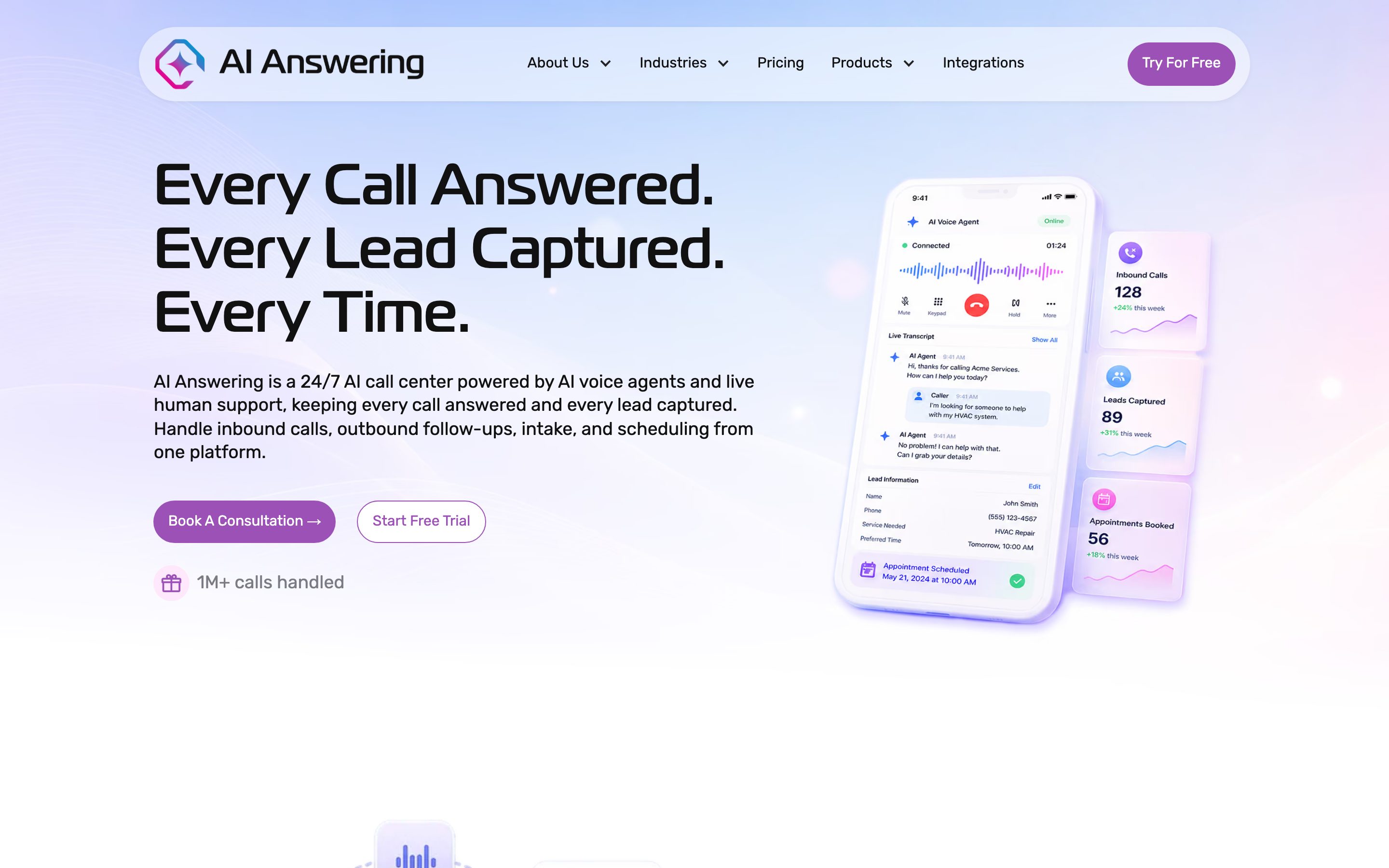
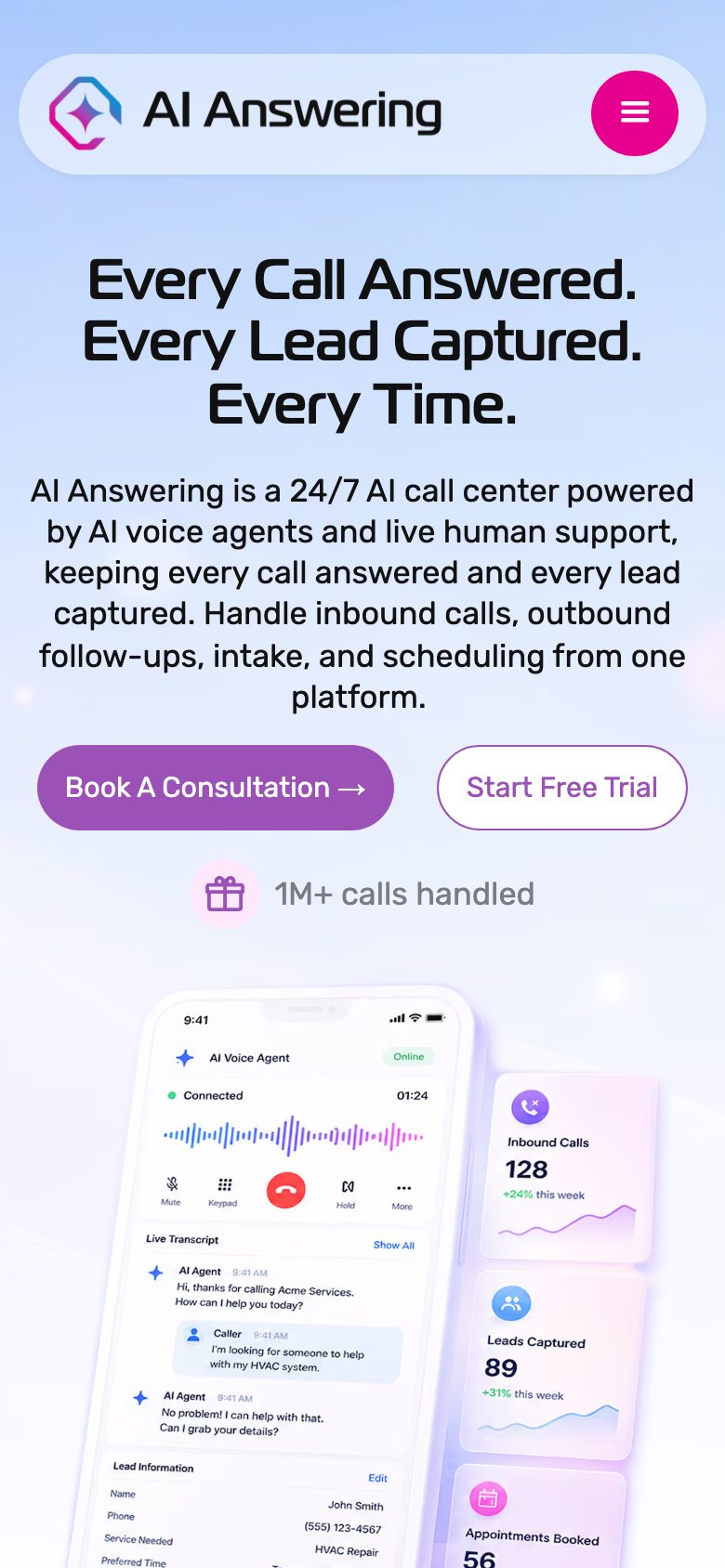
AI Answering is an AI receptionist for law firms and medical offices. It picks up the phone day and night, finds out who is calling and why, books the appointment straight into the right person's calendar, and passes the call to a human when it needs one.
The dashboard a firm opens in the morning
Image coming soon
Law firms lose clients on the calls nobody answers, and many of those come in when the office is closed. Voicemail catches some of them. Most firms end up hiring intake staff to cover the other shifts, which means more people and more cost just so no lead slips away. The people behind AI Answering are old colleagues from LegalSoft, the US legal-software company I worked with from 2018 to January 2025, and they wanted to give firms a better answer. Another company had built the first version for them, and it did not work: features that were supposed to be there were missing, and there was no billing and no admin panel. In August 2026 they asked me to take it over.
One person at the firm sets it up. They describe the firm, upload what the receptionist should know, pick a voice and the hours it should answer, and connect everyone's accounts: each lawyer's calendar (Google, Outlook or Calendly) and the firm's client system, such as Clio, MyCase or HubSpot. Clinics connect the scheduling system they book patients in. From then on, a caller hears a natural voice they can interrupt the way they would interrupt a person, and it can switch to the caller's language. It takes their details, checks who is free and books the slot. When a call needs a human, it transfers it, and the person picking up hears a short summary first, so the caller does not have to start over. Afterwards every call is waiting in the dashboard with the recording, a transcript and a summary.
Setting up the receptionist: voice, hours and greeting
Image coming soon
Connecting each lawyer’s calendar and the firm’s client system
Image coming soon
One call: the recording, the transcript and the summary
Image coming soon
I came in as tech lead with four junior developers. The first month was about getting from minus ten to a hundred: making it work at all, then making it good enough to stand next to the receptionists already on the market. I split it into parts four people could build at the same time without blocking each other. Testing and a test copy of the whole system were running in the first week, and every change still goes through my review. What I want a firm to notice is how little it asks of them: one person sets it up, and it reaches everyone's accounts from there.
The desk where a person takes over a call
Image coming soon
Booking rules and the calendar
Image coming soon
It is a new product and we are still building it.
Under the hood
Seven deployable services: a NestJS and PostgreSQL core, a Python voice agent that bridges Twilio, OpenAI Realtime and ElevenLabs, a React dashboard with a browser softphone, and a separate admin portal. 274 backend test files, and staging and production pipelines from the first weeks.
Integrations
- Twilio
- OpenAI
- ElevenLabs
- Anthropic Claude
- LangChain / LangGraph
- Vapi
- OpenRouter
- Google Gemini
- Google Calendar
- Microsoft Graph
- Calendly
- HubSpot
- Salesforce
- Clio Grow
- MyCase
- Lead Docket
- NexHealth
- athenahealth
- Zapier
- DocuSign
- Stripe
- SendGrid
- S3 / DigitalOcean Spaces
- Redis
- PostgreSQL
- Docker / GHCR
- Amazon Web Services
- GitHub Actions